Professional Teeth Whitening vs. Bonding vs. Veneers: How To Choose the Right Smile Upgrade in Cathedral City
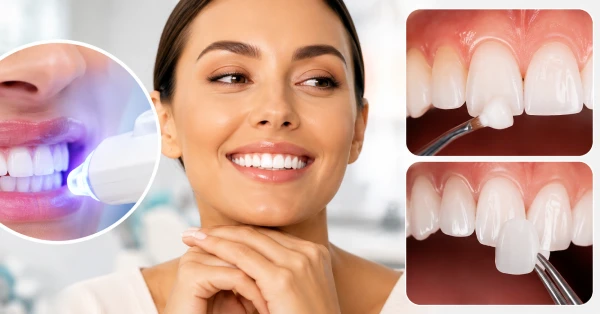
If you are researching teeth whitening in Cathedral City, there is a good chance you are also seeing recommendations for cosmetic bonding and veneers. They are all legitimate smile upgrades, but they solve different problems. The right choice depends on what you want to change (color, chips, shape, spacing) and how long you want the result to last.
In our previous blog, "7 Questions to Ask Before Cosmetic Dental Work," we discussed how to ask smarter questions before committing to a cosmetic plan. In this article, we focus on a simple chooser: what whitening, bonding, and veneers can (and cannot) fix, plus how to decide based on your specific smile goals.
TL;DR - Choose Based on the Problem You Want To Fix
Whitening is best for color. Bonding is best for small shape repairs. Veneers are best when you want a more comprehensive change in color and shape, especially across multiple front teeth.
- Choose whitening if your main issue is dullness or stains on otherwise healthy teeth.
- Choose bonding if you want to fix small chips, uneven edges, or a minor gap with a conservative approach.
- Choose veneers if you want a bigger transformation (shape + color) or need to mask deeper discoloration.
- Avoid DIY whitening if you have sensitivity, gum irritation, or visible dental work that could lead to uneven color.
- Start with an exam so the cosmetic plan does not hide a problem that should be treated first.
A Quick Comparison Chart: Whitening vs. Bonding vs. Veneers
| Option | Best For | What It Cannot Do Well | Maintenance Reality |
|---|---|---|---|
| Professional whitening | Yellowing, surface stains, overall brightness | Fix chips, close gaps, change tooth shape; may not correct deep internal discoloration | Touch-ups may be needed; stain-causing foods/drinks can shorten results |
| Cosmetic bonding | Small chips, minor gaps, reshaping edges, spot color correction | Major alignment/spacing changes; can stain over time | Good home care matters; may need polishing or repairs if chipped/stained |
| Veneers | More complete smile changes (shape + color), uniform look across front teeth | Not ideal if the main issue is only mild staining; not reversible | Regular cleanings, avoid biting hard objects, protect if you grind |
Start With the Problem: What Are You Trying To Change?
If Your Teeth Look Darker or Yellow: Whitening Is Often Step One
When the main concern is color, professional whitening is usually the most conservative starting point. It can brighten your natural enamel without changing tooth shape.
If you want to explore professional options, our teeth whitening page explains common approaches and after-care basics.
If You Have a Small Chip or Uneven Edge: Bonding Can Be a Fast Smile Refresher
Cosmetic bonding uses a tooth-colored resin to restore small chips, smooth edges, and sometimes close a minor gap. It can be a great option when your teeth are mostly the shape you like and you just want to refine a detail.
For an overview of what bonding can address, visit our cosmetic bonding page.
If You Want Shape + Color Changes Together: Veneers May Fit the Goal
Veneers are thin restorations designed to change the visible surface of the tooth. People often consider veneers when they want more uniform shape, a more consistent color, and a coordinated look across several front teeth.
We also explain indications and benefits on our dental veneers page.
Teeth Whitening in Cathedral City: Who Is Usually a Good Candidate?
Whitening tends to work best when your teeth are healthy and your main complaint is external staining (coffee, tea, wine) or general dullness from age-related enamel changes.
- Good fit: even, natural teeth with surface stains; upcoming events when you want a brightness boost.
- May need a different plan: very sensitive teeth, gum recession, or teeth that look grayish from internal discoloration.
- Important note: existing restorations (bonding, crowns) generally do not whiten the same way as enamel, which can create mismatched shades.
When To Avoid DIY Whitening (And What To Do Instead)
Over-the-counter whitening can be tempting, but it is not always the safest shortcut. In our experience, patients are most disappointed when they whiten without addressing sensitivity or existing dental work first, then get a patchy result.
- Skip DIY whitening if you have pain or sensitivity. You may need an exam to identify the cause before whitening.
- Skip DIY whitening if your gums get irritated easily. Poorly fitting trays or strip gel can inflame gum tissue.
- Skip DIY whitening if you have noticeable front-tooth bonding or crowns. You may end up with uneven color.
- Skip DIY whitening if a tooth is much darker than the others. That can suggest internal discoloration that needs a different approach.
How To Decide Between Bonding and Veneers for Chips, Gaps, and Shape
If you are comparing cosmetic bonding in Cathedral City with veneers, the best question is not "which is better?" It is "how much change do I want, and how much maintenance am I comfortable with?"
Bonding Often Makes Sense When:
- You have one or two teeth with small chips or worn edges.
- You want a conservative approach with minimal changes to the tooth structure.
- You are comfortable with the possibility of future touch-ups (polish, repair, or replacement).
Veneers Often Make Sense When:
- You want a more uniform look across multiple front teeth.
- You want to change shape and color together (for example, longer edges plus a brighter shade).
- You have discoloration that may not respond well to whitening alone.
Where a Cosmetic Dentist Helps Most: Planning the "Finish Line"
The goal is not just to pick a procedure. It is to pick the result you want and plan backward. That is where a consultation with a cosmetic dentist in Cathedral City can be valuable, because your dentist can point out issues that change the plan, such as bite wear, uneven enamel thickness, or existing restorations that affect shade matching.
If you want to review a wider range of options, our cosmetic dentistry services page summarizes common smile enhancement treatments.
What to Expect at a Cosmetic Consultation at Smile Guru
At Smile Guru, Dr. Keerthi Senthil typically starts with the "why" behind your request: what you notice in photos, what bothers you up close, and what you want to keep the same. Then we review tooth and gum health to make sure cosmetic work is built on a healthy foundation.
One clinical observation our team sees often is that patients come in asking for veneers when they really want "brighter teeth," and whitening (sometimes paired with small bonding) can deliver the look with less change to the natural teeth.
FAQs
For most surface stains, professional whitening is usually the first step. Bonding can cover discoloration but may stain over time. Veneers can mask deeper discoloration and also change shape, but they are a more involved option. The best choice depends on what type of stain you have and whether you also want to fix chips, gaps, or uneven edges.
If you have tooth sensitivity, gum irritation, untreated cavities, or dental work in the front teeth (like bonding or crowns), whitening strips and gels may lead to uneven results or discomfort. It is also smart to avoid DIY whitening if your teeth look darker due to internal discoloration, which may not respond well. A dental exam helps you choose a safer approach.
Yes, when it is properly shade-matched and shaped, cosmetic bonding can look very natural. It is often used for small chips, minor gaps, and edge repairs. Like natural enamel, bonding can pick up stains from coffee, tea, red wine, or tobacco over time, so maintenance matters.
Longevity depends on habits, bite forces, and home care. Whitening results fade gradually and may need touch-ups. Bonding can last for years but may chip or stain and sometimes needs repair or replacement. Veneers are designed to be long-lasting, but they can still chip or wear and require good hygiene and regular dental visits.
Often, yes. Whitening can be a useful first step because it shows how bright your natural enamel can get before you commit to bonding or veneers. If you later choose veneers, your dentist can use your whitened shade as a reference for a more seamless match.
Look for a team that starts with a diagnosis, explains multiple options, and discusses tradeoffs like longevity, maintenance, and what each treatment can and cannot change. You should also feel comfortable asking about expected shade, contour, and how results are maintained over time.
Related Reading
Conclusion: Pick the Simplest Option That Achieves Your Goal
Whitening, bonding, and veneers are not competing so much as they are different tools. If your priority is brighter enamel, start with whitening. If a small chip or edge bothers you, bonding may be enough. If you want a more complete and uniform transformation, veneers may be the right match.
Want help choosing the right smile upgrade? Call Smile Guru at 760-318-4400 or request an appointment.
Schedule a Cosmetic Consultation