Full-Arch vs. Full-Mouth Dental Implants: What You Actually Need
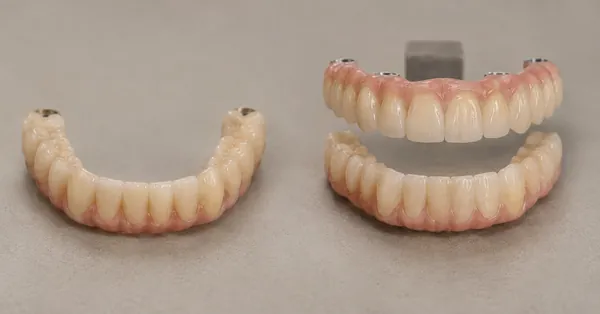
If you have been researching bigger tooth replacement options, you have probably seen confusing terms that seem interchangeable: full arch, full mouth, All-on-4, implant-supported dentures, fixed implant restoration. In reality, these phrases can describe different scopes of treatment. Understanding the vocabulary helps you ask better questions and get a plan that fits your mouth, not just a marketing label.
This guide is written for people comparing full arch dental implants in Cathedral City with full mouth dental implants in Cathedral City, and wondering what a dentist actually means when those words show up online.
TL;DR - Full Arch vs. Full Mouth, Explained Simply
In most cases, full arch means replacing all teeth in one jaw (upper or lower), while full mouth means replacing teeth in both jaws. The best choice depends on which teeth are missing or failing, your bite, and how much bone is available for implants.
- Full arch: one arch (upper OR lower) is restored with an implant-supported set of teeth.
- Full mouth: both arches (upper AND lower) are restored.
- All-on-4: a popular full-arch method, but not the only way to support an arch.
- Bone loss changes planning: it may influence implant number/positioning and whether grafting is considered.
- Bring the right questions: fixed vs removable, bite design, maintenance, and backup options.
Why These Terms Get Confusing Online
Patients often use "full mouth" to mean "I want all my teeth replaced," even if only one arch is the real problem. Some websites use "full arch" and "All-on-4" as if they are identical. Others mix in phrases like "implant-supported dentures" (which may be removable or fixed, depending on design).
A quick rule of thumb: when you see a term, ask (1) how many arches? and (2) fixed or removable? Those two details usually clear up 80% of the confusion.
What "Full Arch" Usually Means for Patients in Cathedral City
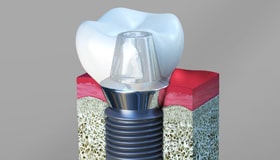
In everyday conversation, full arch dental implants typically means you are replacing all teeth in the upper arch or all teeth in the lower arch with an implant-supported restoration. It is often discussed when:
- You have a denture on the top or bottom and want more stability.
- Most teeth in one arch are missing, breaking down, or not predictable to keep long-term.
- You want a single, stable bite on one arch while keeping natural teeth (or other restorations) on the opposing arch.
If you are still deciding whether implants are the right direction overall, our main page on dental implants in Cathedral City provides a helpful foundation.
What "Full Mouth" Usually Means (And When It Makes Sense)
Full mouth dental implants most commonly refers to restoring both arches. This is often considered when:
- You currently wear dentures on both arches and want more security when eating and speaking.
- Your remaining teeth in both arches have extensive issues and a "save everything" approach may not be the most predictable path.
- Your bite has changed significantly, and rebuilding both arches is the best way to re-establish function.
Full-mouth plans are not automatically "better." They are simply a bigger scope, and the right scope depends on your goals and your clinical starting point.
Full Arch Dental Implants in Cathedral City: How Dentists Decide What You Need
The decision is less about the label and more about the evaluation. When our team reviews a case, the key questions usually include:
1) What Can Realistically Be Saved?
Sometimes, you do not need a full-arch plan if several teeth are healthy and restorable. Other times, teeth that look "okay" can be poor long-term anchors due to gum health, fractures, or repeated failure.
2) Fixed vs. Removable: What Do You Want to Live With?
Many patients researching full arch or full mouth implants are picturing a fixed solution. But some implant-supported restorations are designed to be removable for cleaning. Your preferences, dexterity, and hygiene goals matter here.
If you are comparing denture-style options supported by implants, you may also want to read our page on implant-supported dentures.
3) Bite Forces and Jaw Joint Comfort
Bite design matters. A full-arch solution must be planned to distribute forces in a way your jaw and muscles can tolerate. One experience-based observation from our team: patients who have worn an unstable denture for years often develop compensating chewing habits, so part of planning is anticipating how your bite will change when stability is restored.
4) Bone Levels (Including Bone Loss) and What That Means
Bone volume affects where implants can be placed and how many may be appropriate. If you have had missing teeth for a long time, bone changes are common. That does not automatically disqualify you.
In some cases, a bone graft in Cathedral City may be discussed as part of the planning conversation to improve support for implants.
5) Upper Jaw Anatomy (Sinus Area) for Upper-Arches
The upper jaw can have unique anatomical limits. When there is limited bone height in the back upper jaw, a sinus augmentation may be considered for certain plans. Learn more about that option on our sinus graft page.
Questions to Ask at Your Consultation (Copy/Paste List)
Bring these questions to keep the conversation practical and personalized:
- Am I replacing one arch or both arches, and why?
- Will my new teeth be fixed or removable?
- How will you design my bite so it feels natural?
- Do you expect I will need grafting, and what problem would it solve?
- What does maintenance look like at home and in the office?
- If something chips or loosens, what is the typical repair process?
FAQs
A full arch typically means replacing all teeth in one arch (upper OR lower) with an implant-supported restoration. Full mouth usually means replacing both arches (upper AND lower). Your treatment plan depends on which teeth are missing or need to be removed, your bite, and how much jawbone is available.
Not exactly. All-on-4 is one common approach used to support a full-arch restoration using four implants in an arch. Some full-arch cases use a different number or distribution of implants based on anatomy, bite forces, and clinical goals.
If you want a refresher on that specific option, visit our All-on-4 dental implants page.
Often, yes. Bone loss changes planning, not necessarily eligibility. Depending on your anatomy and goals, options may include bone grafting, a sinus graft for the upper jaw, or an implant approach designed for the bone you currently have. An exam and imaging are needed to decide what is appropriate.
Start with what you are trying to fix: function, comfort, appearance, or stability. If you are missing most teeth in one arch or that arch cannot be saved predictably, a single full-arch plan may be recommended. If both arches are failing or you are in dentures on both arches and want more stability, a full-mouth plan may make more sense.
Ask what teeth can realistically be saved, what restoration type you will wear (fixed vs removable), how your bite will be managed, whether grafting is likely, what maintenance looks like long-term, and what risks apply to your situation. A good plan should be specific to you, not a one-size-fits-all package.
Related Reading
- Dental implants overview
- All-on-4 implant restoration option
- Implant-supported dentures
- Bone grafting for implant preparation
- Choosing implants carefully (long-term thinking)
Conclusion: Choose the Scope, Not the Buzzword
The most helpful way to think about these terms is simple: a full arch plan restores one jaw, and a full mouth plan restores both. From there, the real decision is about what can be saved, how you want your teeth to function day to day, and what your anatomy will support.
If you are comparing full arch dental implants and full mouth dental implants in Cathedral City, our team can help you translate the terminology into a clear, personalized plan.
To schedule a consultation, call Smile Guru at 760-425-4600.
Schedule a Consultation